

Different Types of Mould
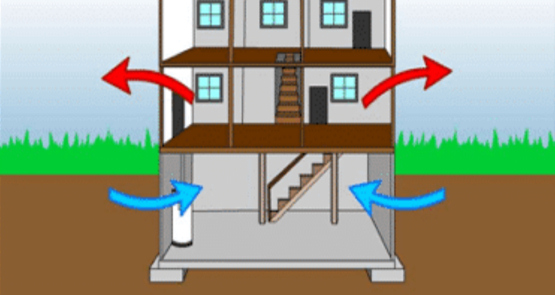
The image above on the left demonstrates how, in a basement, cold and damp air is allowed to infiltrate the property, while warm air naturally flows out of the building.
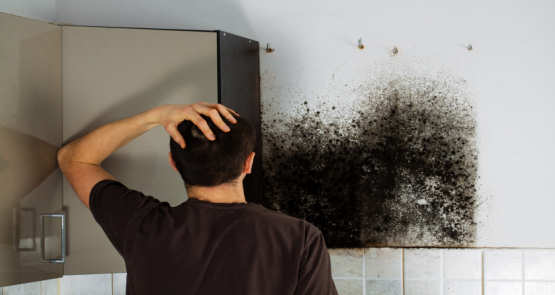
If mould is present within this cellar, the natural convection will carry the spores up from the basement to the habitable sections of the home; this phenomenon is known as the 'stack effect'.
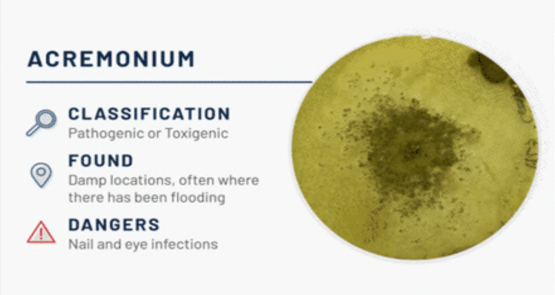
Acremonium
Acremonium is commonly found within buildings suffering from water damage. It spreads slowly, starting as a small moist patch and then evolving into a powdery substance.
Chaetomium
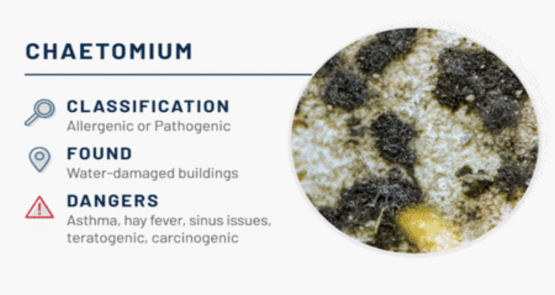
Chaetomium is commonly found in damp and humid locations subjected to some form of water damage.
- Usually found on plaster, wallpaper and wood.
- A possible cause of hay fever, asthma and sinus issues.
- Potentially carcinogenic.
Mildew - what is it?
Mildew is a fungus which thrives in humid environments, which may even be cold. It grows on organic materials and surfaces such as walls and fabrics, feeding on and deteriorating the organic material it resides on. Its appearance is usually dusty or flat.
Mildew can progress to become mould, so it also needs to be removed. To remove mildew, all you need is an anti-fungal treatment and a stiff brush.
To eliminate the musty smell of mildew, it's best to introduce clean air rather than masking the odour. Use fans and open windows for ventilation. Remember, whenever using a cleaning product, be sure to read the instructions and test it on a small area first.
Who is Most at Risk?
Mould has the ability to impact anyone, but there are people in society who are more vulnerable.
These can include:
- Babies and children
- Older people
- Pregnant women
- Those with existing skin problems, such as atopic eczema
- Those with respiratory problems, such as allergies and asthma
- Those with a weakened immune system, such as individuals undergoing chemotherapy

Common Symptoms
Moulds produce allergens, which can be irritants and/or toxic substances. Within this environment, the symptoms include respiratory tract infections (RTIs) such as:
- Stuffy nose
- Wheezing
- Red or itchy eyes
- Itchy skin
- Asthma attacks
- Joint pain and fatigue

Further Damage to Lungs
In addition, while not common, mould spores can also be carcinogenic and toxic.
Some fungal particles can colonise the airways of susceptible individuals.
Toxic moulds can cause nausea, diarrhoea, suppress a person's immune system, and have been linked to cancer.
How to Treat Mould
If removing mould, remember, mould can be toxigenic, pathogenetic and allergenic, and PPE is required.
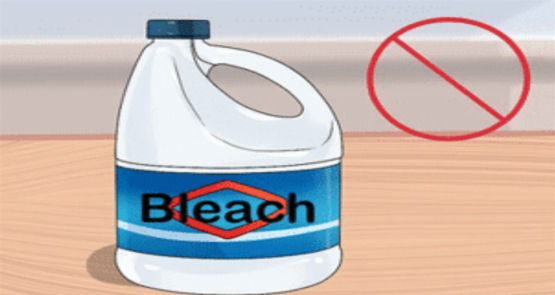
If you asked many people how they would clear mould, you might often hear bleach as a suggested option. Most people have it, and it is commonly associated with killing bacteria. However, since mould is a fungal issue, this makes bleach unsuitable for the job.
Bleach is not a fungicide; it is only a registered cleaner, and a poor choice at that, because it merely kills contamination. British Standards, the WHO, and all international agencies recognise dead mould is 40 times more dangerous than live mould.
Key Takeaway: Do not use bleach as a chemical to remove mould!
What Can I Use?
When removing mould from non-porous surfaces, these make great antibacterial treatments:
- Hydrogen Peroxide Solution: Hydrogen peroxide, a solution capable of killing mould, is less harsh than bleach. Use a 3 to 10 percent concentration of hydrogen peroxide and spray it on the area. This solution is effective on kitchen appliances, bathroom fixtures, floors, and walls.
- Distilled White Vinegar Solution: Pour vinegar into a spray bottle and spray it onto the mould. Let it sit for an hour, then wipe down the area. White vinegar is often used in combination with baking soda for particularly tough mould.
When removing mould, it is important to:
- Identify and eliminate the cause.
- Dry it out.
- Remove the mould.
- Decontaminate.
Conclusion
Fact: If standard of living is your number one objective, quality of life almost never improves. But if quality of life is your number one objective, standard of living invariably improves.
The historic nature of the UK's housing stock presents many challenges for modern living, especially where damp and mould are concerned. The two are closely linked. By controlling the presence of damp through good ventilation and investigating water leaks, we might avoid mould altogether. If mould does occur, it should be removed safely.